Table of Contents:
Preparing Site
Site Layout
Preparing Site
(back to top)
Develop Layout
Develop a layout for your Giga containers, wire runs, and pad mounts. Site planning early will prevent many future headaches when it is time to operate your site.
Groundwork
-
Is the site in a flood zone? Do you need to do any ground work to raise the site?
-
What will you place the Giga unit on? You will want it on a firm footing so we recommend either packed rock or a concrete pad.
-
Can I stack Containers? Yes! Some customers prefer to stack the containers for a higher site density. This requires extra planning for base support, stair access, and electrical feed.
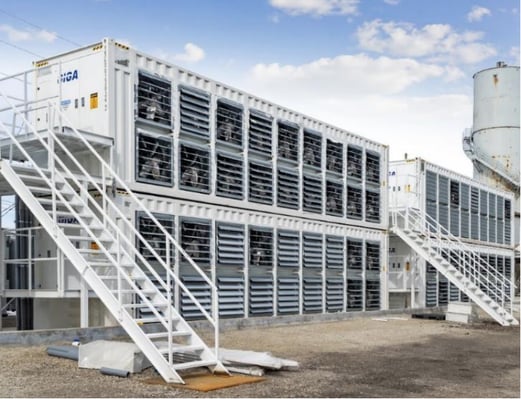
NOTE: We can provide drawings for the stairs but we do not manufacture.
Sound
Consider the sound impact of the site. Are there any local ordinances you need to be in compliance with? Does the site have any “neighbors” that you need to consider? Will you need to implement any type of sound dampening on the site?
Site Layout
(back to top)
Airflow
Airflow is one of the biggest considerations. Are there any natural wind blocks in place at the site? What is the prevailing wind direction in that area?
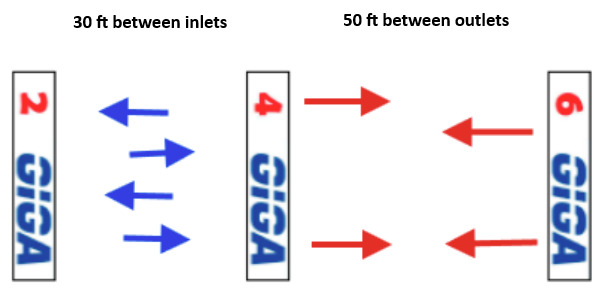
If you are deploying multiple units at the same site Giga recommends 30’ between inlets and 50’ between outlets. This will ensure the units are not fighting for air, see example site layout below:
Container Types
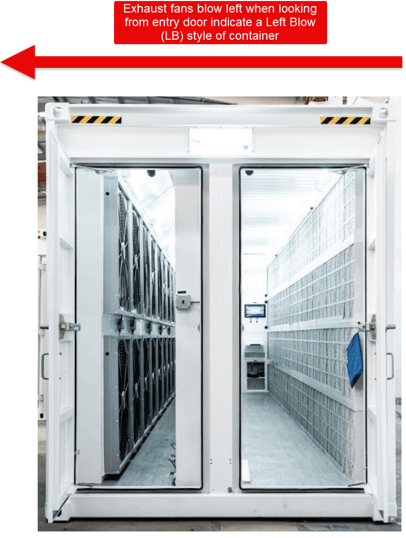
There are 2 container types of Giga Air Boxes. Left Blow (LB) or Right Blow (RB) units. Be sure you order the correct type for your site layout.
This orientation can be identified on the black Giga name plate on the outside of the entry door, or if you stand at the entrance doors of the unit and look which direction the fans are blowing, that will determine LB or RB. Pictured here is a Left Blow with the intake filter wall on right side and fans exhausting to the left side.